
Four GCSEs at grade 9–3, including English and Maths.
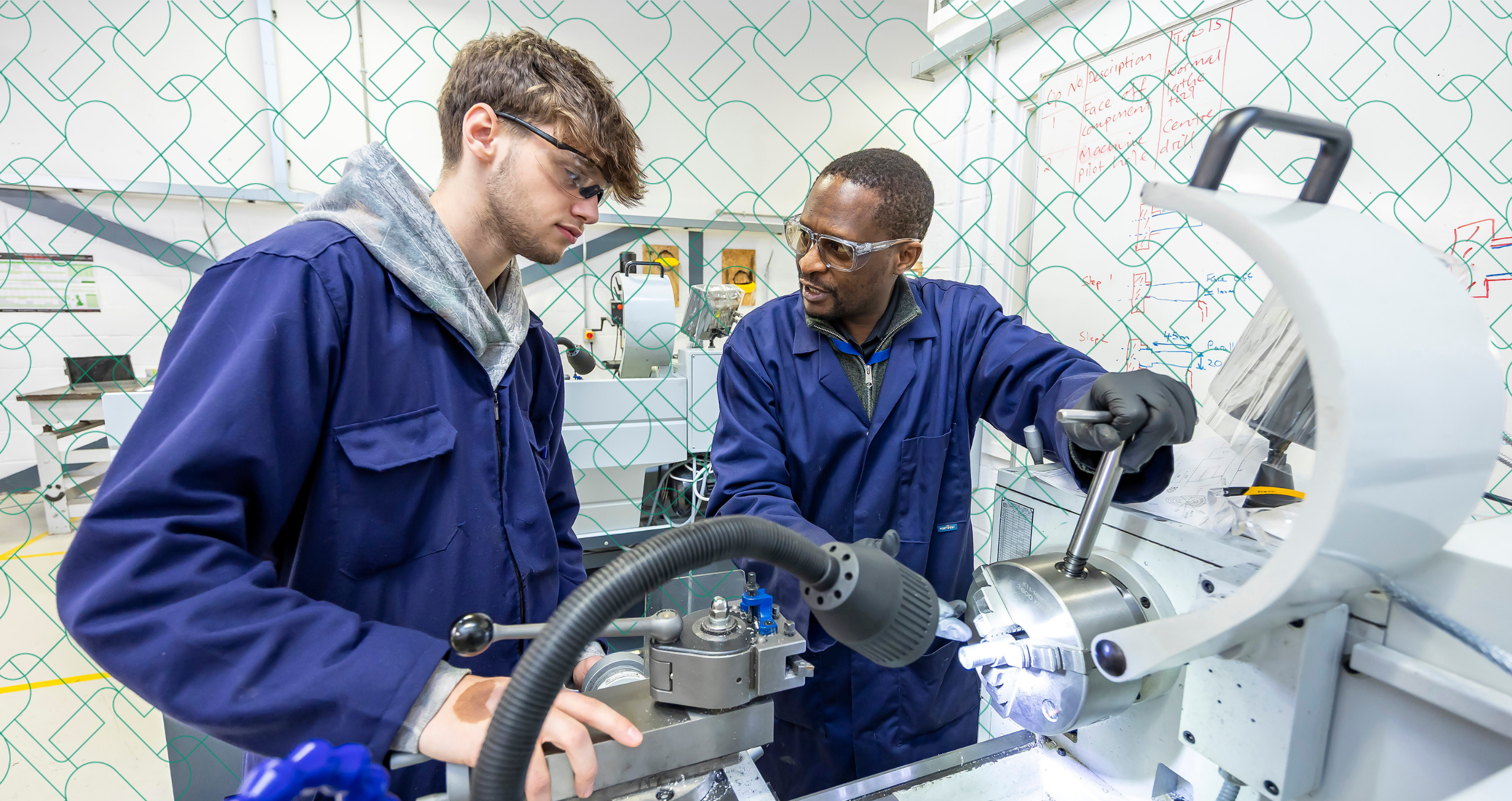
The foundation programme in Engineering is designed to help you flourish in a number of engineering career routes. You will study a range of engineering design development principles such as The Engineered World and Engineering Materials as well as CAD. These will help you progress onto the Level 3 T Level Design and Development for Engineering and Manufacturing on either the Mechanical Engineering or Electrical and Electronic Engineering pathways the following year.
Four GCSEs at grade 9–3, including English and Maths.
You will learn how to analyse and interpret engineering and manufacturing requirements, systems, processes and technical drawings and propose and design mechanical engineering systems, products and solutions.
Working to a clients brief, you will learn how to communicate proposals and design solutions using your skills gained through understanding specialist software, engineering equipment such as lathes and digital tools.
Assignments, course work, practical and online multiple choice assessments at the end of each unit.
Alongside your timetable at College, you will start an industry work placement from January in your first year. This will help you put in to practice all the skills, knowledge and understanding you have gained throughout the course.
The T Level helps prepare learners to become employed in the industry via a successfully completed industry placement. It also gives learners the opportunity to study university courses in Motorsport and Automotive Engineering. You can go on to do Mechanical Engineering Technician Maintenance & Operations Engineering Technician Machining Technician (CNC or manual) Fabricator / Welder Engineering Operative Automotive or Marine Engineering Apprenticeships
£30 for Textbook and £25 for overalls